





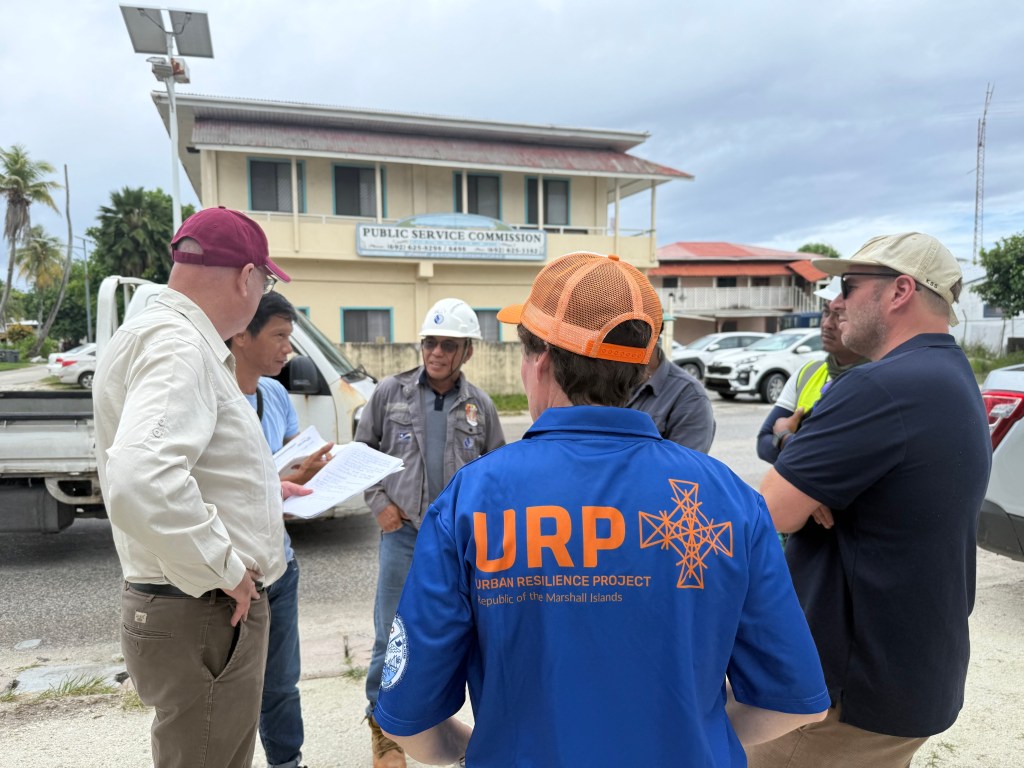
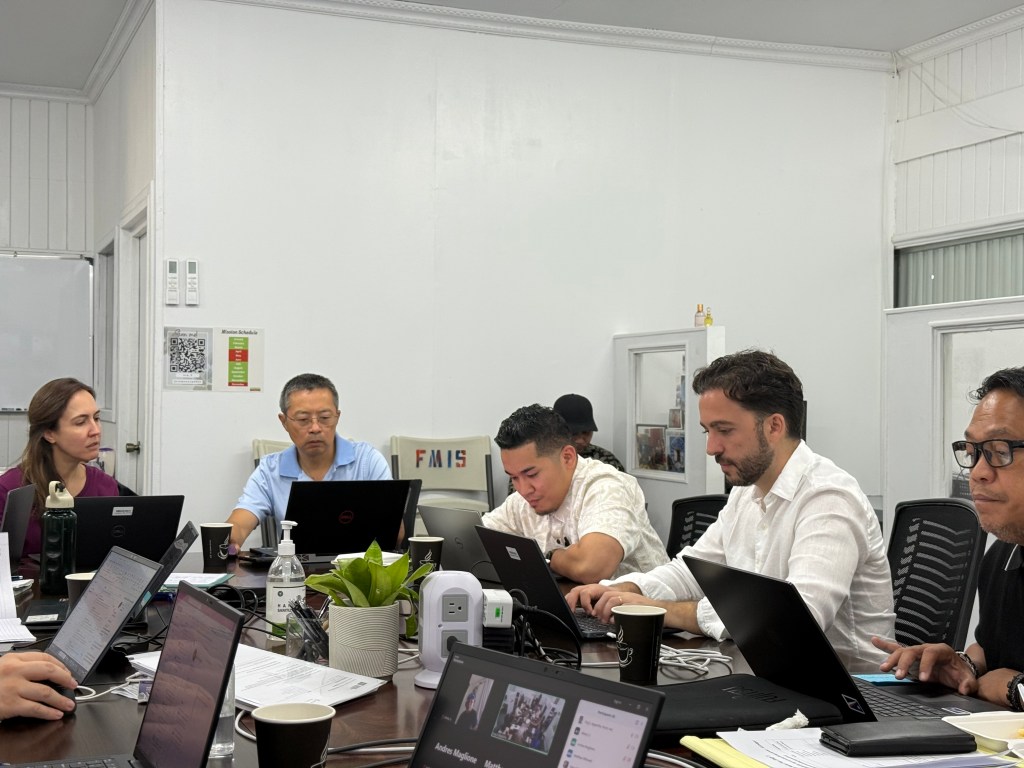
MPWIU – The Implementing Agency
Component 1:
Risk-informed Adaptation Planning
The objectives of this component are to strengthen the Government’s institutional and technical capacity on
risk-informed adaptation planning through enhanced spatial planning, capacity building support for implementation
and compliance of the building code, and development control policies or guidance that consider disaster and climate
risks.
Component 2:
Coastal Resilience Investments
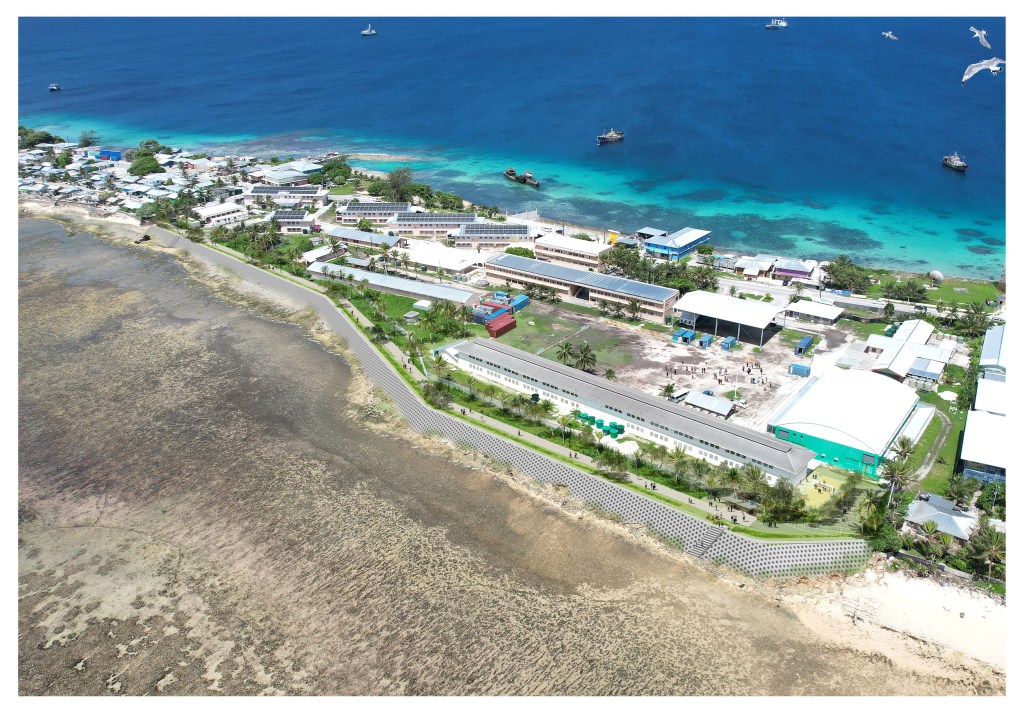
The objectives of this component are to finance targeted coastal resilience measures which will protect select
government infrastructure and/or prioritized assets in Majuro42. Flooding in Majuro Atoll can be caused by swell
waves, typhoons, extreme rainfall, and tsunami. The largest swell waves arrive from the northeast, with offshore wave
heights along the northern islands and Delap-Uliga-Djarrit (D-U-D), coastline exceeding five meters for extreme events
with a return period of 50 years.
Component 3:
Resilient Public Facilities
The objectives of this component are to finance investments that are demonstrative of resilience, inclusive, and
sustainable standards that may be achieved in future public facilities in RMI. Investments supported under
Component 3 will provide demonstrative examples of outputs from Component 1. Investment prioritization will be
informed by the National Infrastructure Investment Plan (NIIP) and Three-Year Plan, with the selection criteria
(incorporating strategic value, project activity readiness, cost, and impact) detailed in the Project Operations Manual
(POM).
Component 4:
Project Management & Implementation Support
This component will help the Government establish and operationalize the proposed project through a dedicated
Project Implementation Unit (PIU). It intends to support the day-to-day coordination, management, and
implementation of the project, while building institutional capacity to sustain investments beyond the project’s
closure such as through technical training. This component will support: (i) the recruitment of consultants to support
the implementation of all project activities, such as a Project Manager, Engineer, and technical, operational and
administrative support; (ii) monitoring, review, and evaluation of the project; and (iii) capacity building and training
for operations and maintenance, as well as risk-informed asset management.
Updates
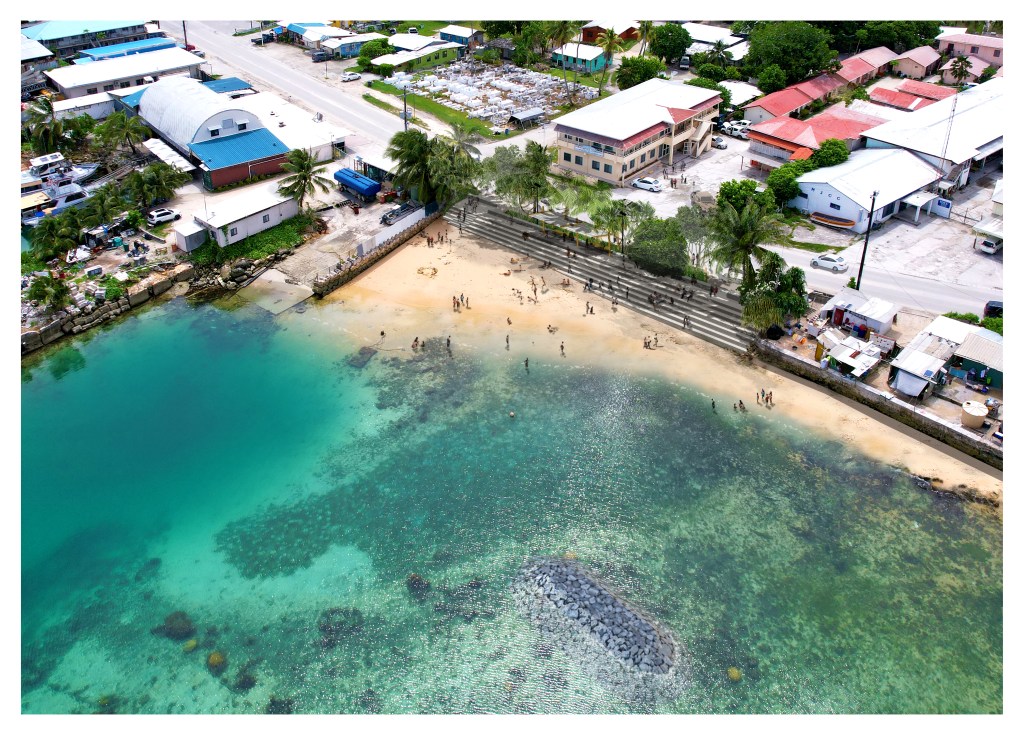
Coastal Protection: 45m Eletutu Beach Stepped Seawall & Breakwater Construction
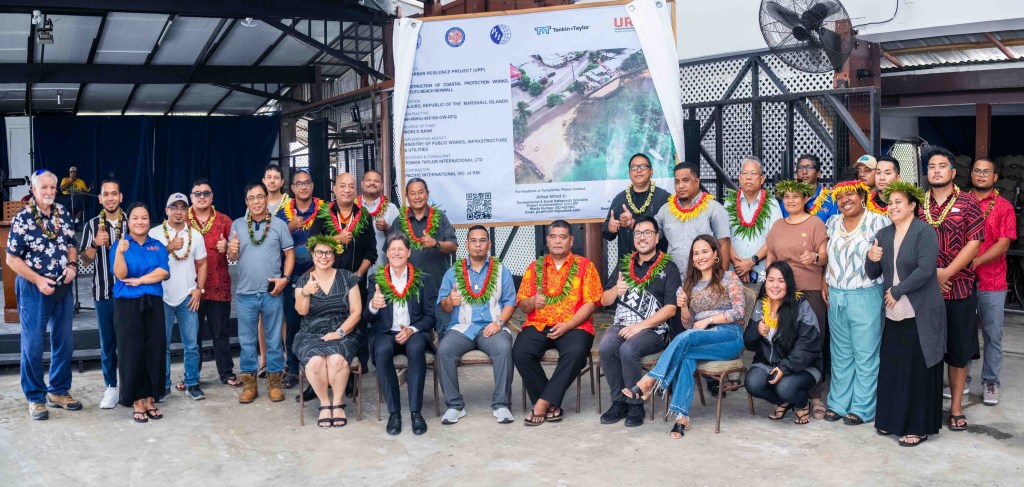
Component 3: Resilient Public Facilities, begins work on a 45m long stepped seawall and breakwater designed to combat the impacts of sea-level rise and increase resiliency.
Deliverables
Final Environmental and Social Instruments
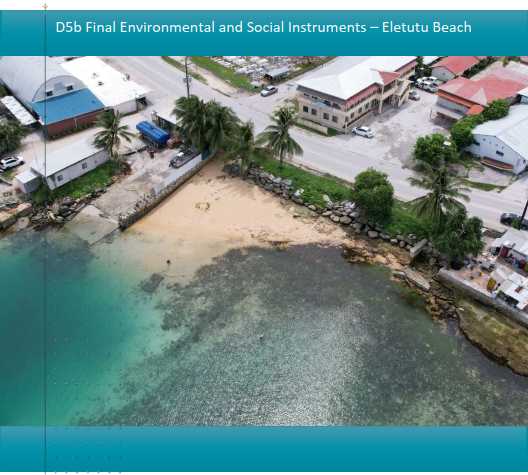
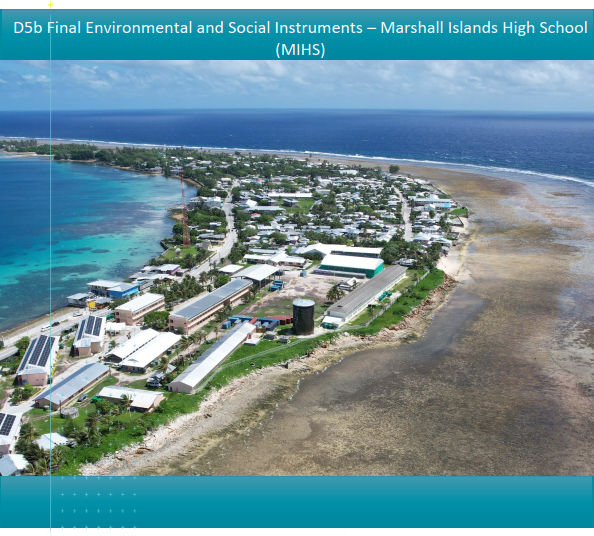
Labor Management Procedures (LMP) & Environmental and Social Management Framework (ESMF)
- LMP Document – Updated July 2025
- ESMF – Updated June 2025
Quicklinks

RMI Urban Resilience Project
Click below for more information.
Resettlement Framework
The purpose of the Marshall Islands Urban Resilience Project (‘MURP’ or “the Project”)
Resettlement Framework (RF) is to set out the requirements, principles and organizational
arrangements any concerning project works that could involve physical or economic displacement
of project affected persons (PAPs) during implementation.
Environment & Social Management Framework
The WB’s Environmental and Social Framework 2017 (ESF) requires that, for WB funded
projects, associated environmental and social (E&S) risks need to be identified during
project preparation and managed throughout project implementation.
 Ministry of Public Works, Infrastructure, & Utilities